A Hollywood Hills address can be exciting, but buying on a slope is not the same as buying on a flat lot. You are not just evaluating finishes, views, and layout. You are also evaluating grading, drainage, retaining walls, access, wildfire considerations, and future permit issues that can affect cost and safety. This guide walks you through the key checks that help you buy a hillside home in the Hollywood Hills more confidently. Let’s dive in.
Why hillside homes need extra care
In the Hollywood Hills, many homes sit on mapped hillside lots that follow special Los Angeles zoning and building rules. For buyers, that means earthwork, retaining walls, and drainage are often treated as technical site issues, not simple maintenance items.
The Los Angeles Department of Building and Safety says grading permits are required for earthwork in the Hillside Grading Area, and soils or geology reports are usually required before permits are issued. The city’s zoning code also applies retaining wall standards to hillside lots that are newly developed or substantially altered.
That matters because many hillside homes rely on engineered features to make the site usable. Cut-and-fill grading, retaining walls, and drainage systems may all be working together behind the scenes to support the house and control water.
Start with the site, not the staging
A beautiful kitchen does not tell you whether the lot is performing well. In the Hollywood Hills, the site itself can be just as important as the house.
As you evaluate a property, think in layers. You want to understand the structure, the slope, the drainage pattern, the access route, and whether any past work appears to have been properly permitted.
Martin Avalos brings a contractor-minded lens to this process, which is especially valuable on hillside properties. When a home sits on engineered ground, practical due diligence matters more than surface appeal.
Check foundation and slope conditions
A general home inspection is helpful, but it is rarely enough for a hillside purchase. You should also look closely for signs that the structure or site may need deeper review.
Common warning signs include:
- Settlement cracks
- Diagonal cracking in walls or ceilings
- Sloping floors
- Doors or windows that stick
- Evidence of prior underpinning
- Signs the home was specially engineered for the slope
LADBS notes that grading work in hillside areas usually requires soils or geology review. California’s seismic hazard program also requires site-specific geotechnical investigations by licensed professionals before permits are issued in zones of required investigation.
If the property shows movement, or if you may remodel later, a structural and geotechnical review can be more important than the standard inspection summary. A house can look fine cosmetically while the site still needs expert analysis.
Inspect retaining walls separately
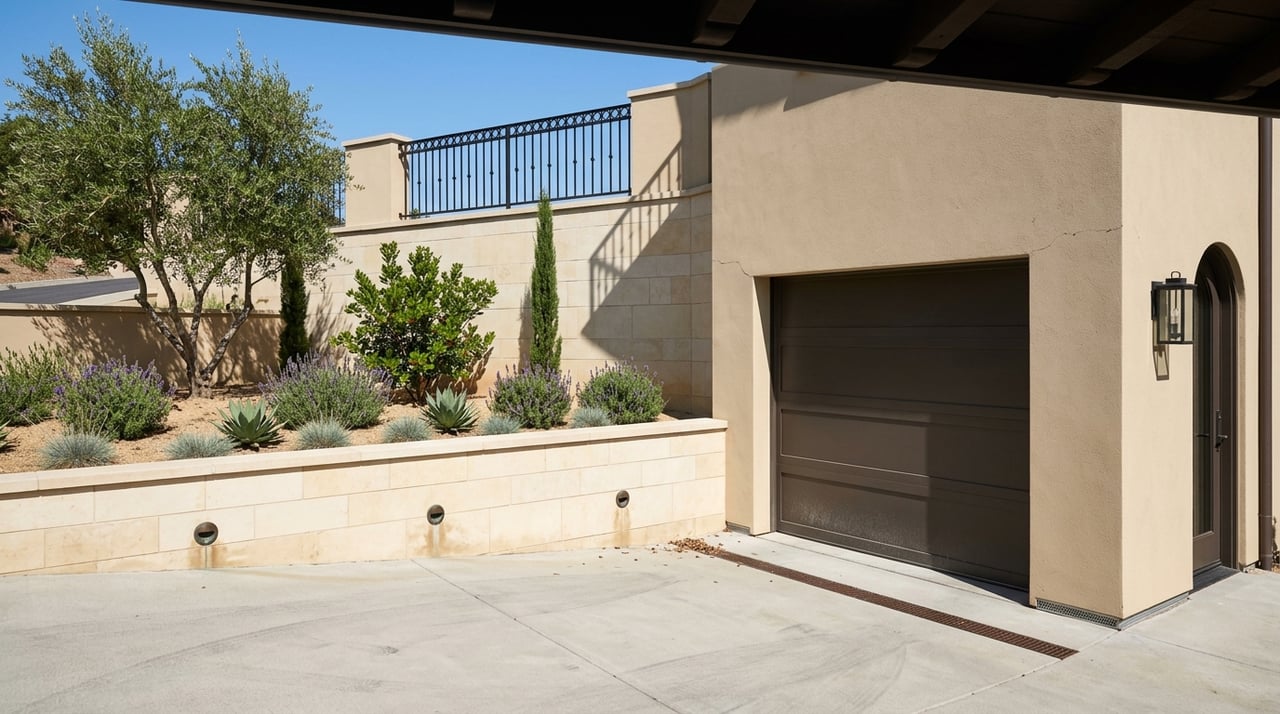
Retaining walls deserve their own attention. On a hillside property, a wall is not just landscaping. It may be part of the lot’s core support and drainage system.
The Los Angeles zoning code applies hillside retaining-wall standards to new construction, major remodels, site modifications, and use modifications. It also limits a single free-standing vertical retaining wall to 12 feet.
When you walk the property, watch for:
- Leaning or bulging walls
- Horizontal or stair-step cracking
- Staining that suggests trapped water
- Differential movement
- Separated caps
- Poor drainage behind the wall
Minor repairs can be manageable, but failing structural walls can become much more expensive once demolition, grading, drainage, and replacement planning are involved. National planning benchmarks in the research suggest small retaining wall repairs may average roughly $250 to $1,250, while demolition and removal often run about $10 to $20 per linear foot, averaging roughly $2,200 to $4,500 on many projects.
Watch drainage like a hawk
On hillside homes, water management is one of the biggest ownership issues. If water moves toward the house or gets trapped behind a wall, the effects can spread to foundations, slopes, and hardscape.
The city’s hillside grading guidance ties grading to protective drainage control systems. That is why drainage deserves as much attention as the roofline or floor plan.
During a showing or inspection, look for:
- Surface runoff flowing toward the home
- Downspouts that discharge poorly
- Erosion at the bottom of the slope
- Damp staining near walls or lower levels
- Signs of previous drainage work
- Any indication that past drainage work may have been done without permits
French drains are a common retrofit when water is moving toward the foundation or behind a retaining wall. The research report notes national planning benchmarks of about $500 to $10,000, or roughly $10 to $50 per linear foot, depending on scope.
Review access and driveway realities
In the Hollywood Hills, access matters as much as square footage. A narrow or steep approach can affect daily convenience, emergency response, and even future permit options.
The Los Angeles Fire Department evaluates streets and fire lanes for width, turnarounds, turning radii, grade access points, parking restrictions, overhead clearance, load capacity, and secured entrances. The department also notes that narrow roads, hairpin turns, and tight curves can become choke points on Red Flag days.
LAFD recommends a driveway that is at least 12 feet wide, with 15 feet of vertical clearance and a slope of less than 5 percent to better serve emergency vehicles. That is guidance rather than a universal code rule, but it is a practical benchmark when you are judging whether access is realistic.
If you are thinking about future additions or major work, access can matter even more. Los Angeles code says some new one-family construction or additions in hillside areas cannot receive building or grading permits unless the site has an approved vehicular access route from a street with a minimum 20-foot continuous paved roadway to the hillside boundary. The code also limits driveway and ramp slope to 20 percent in the relevant provisions.
Verify wildfire exposure by parcel
Do not assume every Hollywood Hills address is treated the same for wildfire planning. The Los Angeles Fire Department says the city’s Very High Fire Hazard Severity Zone covers most hilly and mountainous parts of Los Angeles and includes portions of Hollywood, but parcel-level verification matters.
CAL FIRE also notes that fire hazard maps measure hazard, not a property-specific risk score. In plain terms, a map can help you understand the broader hazard designation, but it does not replace property-level review of access, vegetation, and hardening features.
For buyers, that means checking the official map for the specific address rather than relying on the neighborhood name alone. Two nearby properties may not be regulated exactly the same way.
Understand defensible space and home hardening
If a property falls in a wildfire-prone area, you want to know whether it can realistically be maintained. That includes both the surrounding vegetation and the home’s physical features.
CAL FIRE says 100 feet of defensible space is required by law, with the first five feet from the home treated as an ember-resistant zone. LAFD adds that properties in the Very High Fire Hazard Severity Zone must maintain year-round compliance on vegetation within 200 feet of structures and within 10 feet of combustible fences or roadways and driveways.
LAFD also highlights practical hardening items that matter in hillside neighborhoods, including:
- Roof and gutter cleaning
- Ember-resistant vents
- Screened openings
- Noncombustible materials near decks
- Clearing flammable items away from the structure
CAL FIRE emphasizes that defensible space and home hardening work together. For a buyer, this is not just about compliance. It also affects maintenance demands, budget, and insurance options.
Confirm disclosures and insurance early
In hillside areas with wildfire exposure, insurance should be checked early in the process. It is better to understand pricing and availability before removing contingencies.
The California FAIR Plan says it provides basic fire insurance when traditional carriers will not. The California Department of Insurance also says its wildfire-model reforms are intended to factor mitigation and home-hardening efforts into rates and expand policy availability in wildfire-distressed areas.
Disclosures matter too. LAFD says AB 38 requires specific disclosures for buyers of residential property in the Very High Fire Hazard Severity Zone. The California Department of Real Estate says the Natural Hazard Disclosure Statement now includes whether a property is in a high fire hazard severity zone, not just a very high zone.
If the property is in a designated zone, ask for all related documentation early. That may include defensible-space compliance information along with the standard disclosure package.
Review the permit trail carefully
For a hillside purchase, the permit trail can tell you almost as much as the inspection report. If retaining walls, grading, drainage work, additions, or slope improvements were done, you want to know whether they were permitted and signed off.
LADBS offers online permit and inspection reports along with online building records. That gives buyers a practical way to confirm whether visible improvements appear to match the public record.
This is especially important if you see older drainage systems, rebuilt walls, hillside stairs, added decks, or changes to the driveway. If the paper trail is incomplete, that does not always mean a deal is bad, but it does mean you should slow down and investigate.
Budget for hillside repairs realistically
Hillside costs can escalate faster than many buyers expect. Access, hauling, shoring, and geotechnical work can make repairs more complicated than the same issue on a flat lot.
The research report includes national planning benchmarks that help frame the scale of risk before you write an offer:
| Item | Common benchmark |
|---|---|
| Foundation repair | About $5,173 average, with a normal range of $2,225 to $8,133 |
| French drain or exterior drainage | About $500 to $10,000, or roughly $10 to $50 per linear foot |
| Retaining wall repair | Roughly $250 to $1,250 for smaller repairs |
| Retaining wall removal prep | Often $10 to $20 per linear foot, averaging about $2,200 to $4,500 on many projects |
These are not Hollywood Hills quotes. In a hillside setting, actual bids can be materially higher because site conditions and permit requirements are more complex.
Use contingencies that protect you
A strong hillside offer should leave enough time to review the full picture. Structural, geotechnical, drainage, access, wildfire, and insurance issues often overlap.
The usual home-inspection contingency should not be your only safeguard. LADBS says hillside grading usually requires soils or geology review, and California’s seismic hazard rules require site-specific geotechnical investigations in zones of required investigation.
A practical strategy is to make structural and geotechnical reviews a condition before removing contingencies, then negotiate only after written contractor and engineer scopes are in hand. That approach becomes even more important if the property has a steep driveway, limited turnaround, older retaining walls, or obvious drainage concerns.
What a safe hillside buying process looks like
If you want a simpler way to think about it, focus on a five-part review before you commit:
- Verify the parcel for fire-zone status and hillside context.
- Inspect the structure for settlement, cracking, and slope-related movement.
- Evaluate site systems like retaining walls, grading, and drainage.
- Check access and insurance before contingencies are removed.
- Review permits and disclosures for past work and wildfire-related obligations.
That process helps you make a decision based on how the property actually performs, not just how it shows. In the Hollywood Hills, that is the difference between buying a view and buying a manageable long-term asset.
Buying a hillside home safely takes patience, strong due diligence, and honest advice. If you want a practical, construction-aware perspective on a Hollywood Hills property, Martin Avalos can help you evaluate the risks, the repair questions, and the offer strategy before you move forward.
FAQs
How is buying a Hollywood Hills hillside home different from buying a flat-lot home?
- A hillside home often involves engineered grading, retaining walls, drainage systems, access limitations, and wildfire-related considerations that need separate review.
What inspections should you get for a Hollywood Hills hillside home?
- In addition to a general home inspection, you should consider structural, retaining wall, drainage, and geotechnical review when site conditions or future plans call for it.
Why does drainage matter so much for a Hollywood Hills hillside property?
- Poor drainage can direct water toward the foundation, build pressure behind retaining walls, increase erosion, and affect slope stability.
How do you check whether a Hollywood Hills home is in a fire hazard zone?
- Verify the specific parcel using the official Los Angeles Fire Department and CAL FIRE map tools rather than assuming the entire neighborhood is treated the same way.
Can a steep driveway affect future plans for a Hollywood Hills home?
- Yes. In some hillside situations, access standards and driveway slope rules can affect whether future additions or major work can be permitted.
When should you check insurance for a Hollywood Hills hillside property?
- You should verify insurance availability and pricing early, ideally before removing contingencies, because wildfire exposure can materially affect coverage options and cost.